How many KPIs is too many?
How to choose a manageable set of KPIs and keep your dashboard focused on the decisions it needs to support.
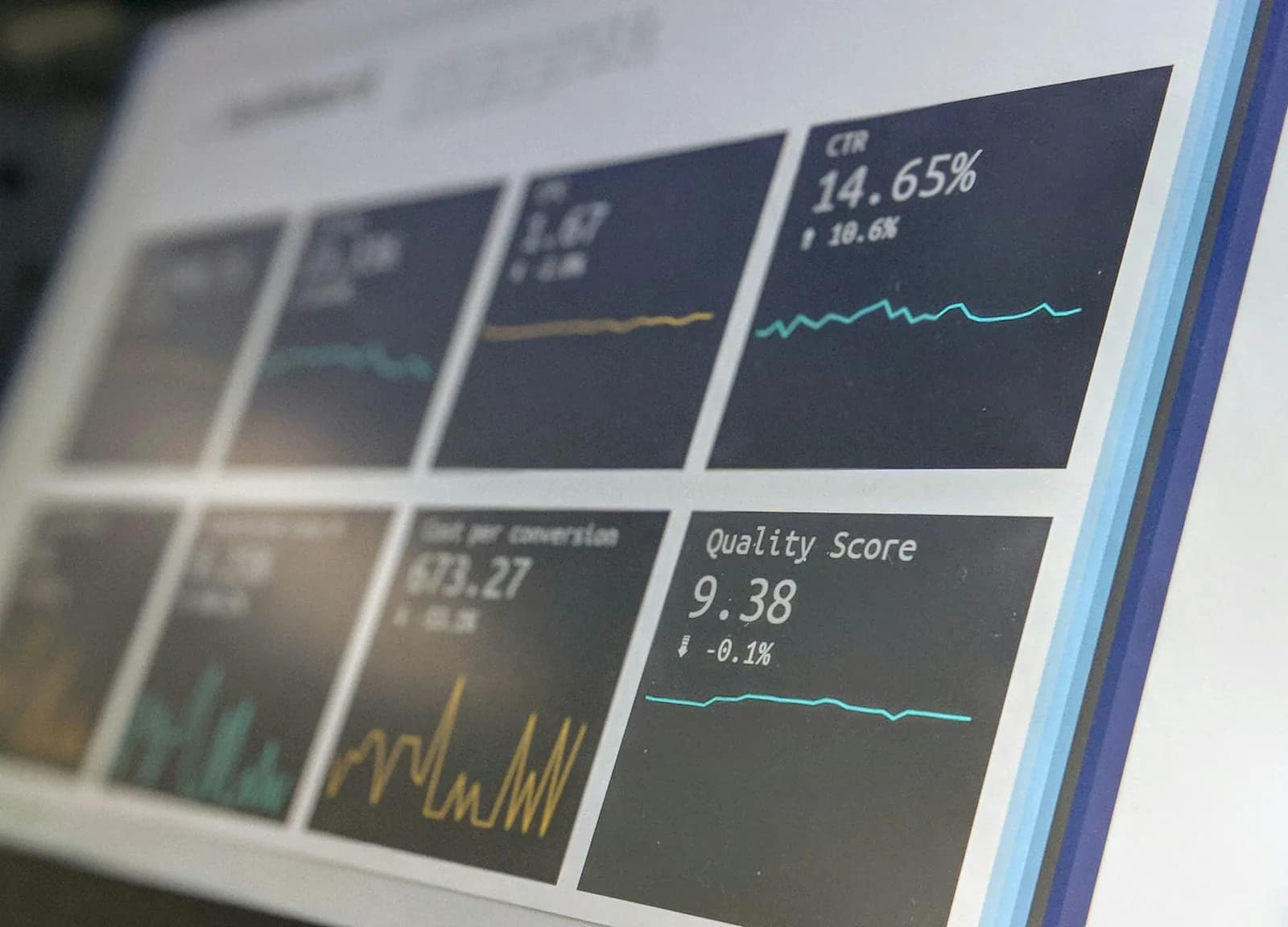
If your executive dashboard looks like an aircraft cockpit, you have a problem.
It sounds counterintuitive. More data should mean better decisions, right? In reality, the opposite often happens. Research from McKinsey shows that executives spend roughly 40% of their time on decision-making, yet 60% of them report that time is spent poorly. The culprit isn't a lack of information. It's drowning in it.
So where's the line? How many KPIs should an executive actually track before the metrics become noise? Here's what the research says and what actually works in practice.
The science of cognitive overload
Back in 1956, psychologist George Miller published one of the most cited papers in the history of psychology. His finding was simple but powerful: the average person can hold roughly seven items in their working memory at any one time. This became known as Miller's Law, often quoted as the "magical number seven, plus or minus two."
More recent research has refined this further. Cognitive psychologist Nelson Cowan suggests that for complex information, the real limit is closer to four items. When we push beyond these limits, our brains don't just slow down. They start making mistakes, missing patterns, and defaulting to gut instinct rather than evidence.
Now apply this to an executive dashboard with 47 metrics, 12 trend charts, and eight different colour-coded alerts. It's not a decision-support tool. It's a decision-avoidance tool.
What the practitioners recommend
There's no universal magic number, but experienced practitioners converge on a surprisingly narrow range.
Performance management experts at recommend three to five KPIs in each of four categories: Employees, Customers, Revenue, and Processes. That gives you 12 to 20 total metrics, but only three to five in your immediate field of vision at any time.
Other consultancies suggest keeping executive-level KPIs between five and 15, with a strong emphasis on the lower end for day-to-day decision-making. The keyword here is "key." If everything is a priority, nothing is.
One telling data point comes from a Dutch municipality that identified over 1,000 KPIs across its services. The initiative was called "PURPOSE." The result? Managing so many metrics proved nearly impossible. Teams ignored them entirely. Compare that to a retail company that reduced its KPIs from 80 to around 15 meaningful indicators and saw immediate improvements in focus and accountability.
The real problem isn't the number
Here's where it gets interesting. The number of KPIs matters, but what matters more is whether they actually drive decisions.
Many executives admit that only two or three metrics genuinely influence their choices. The rest? Background noise at best, distraction at worst. If your dashboard shows 30 KPIs but you only act on three, you don't have a measurement system. You have a reporting burden.
The question to ask isn't "how many KPIs should we have?" It's "how many decisions do we need to make, and what information do we actually need to make them?"
A practical framework for KPIs
Based on both cognitive science and practical experience, here's a framework that works.
At the CEO or founder level, aim for five to seven primary KPIs. These should be metrics that, if they moved significantly, would change what you do next week. They should span the health of your business: financial performance, customer outcomes, operational efficiency, and team engagement. If a metric doesn't trigger action, it doesn't belong on your primary dashboard.
Allow each functional leader three to five KPIs that ladder up. Your Head of Marketing, Sales Director, and Operations Lead each need their own focused set of metrics. These should connect logically to your primary five to seven, creating a clear line of sight from activity to outcome.
Keep secondary metrics accessible but not visible. You'll want the ability to drill down when something looks off. But these diagnostic metrics shouldn't clutter your daily view. Think of them as the detailed readings you check when a warning light comes on, not the dashboard you drive with.
Review and prune quarterly. Business priorities shift. What mattered six months ago might be a solved problem now. A KPI that once drove action might have become a vanity metric. Build a regular habit of asking: "Did this number change any decision we made in the last 90 days?" If the answer is no, consider removing it.
Warning signs you have too many KPIs
Watch for these symptoms: Your leadership meetings spend more time reviewing metrics than discussing strategy. Dashboards take so long to produce that the data is stale by the time anyone sees it. Team members cherry-pick the KPIs that make them look good and ignore the rest. New KPIs keep getting added but old ones never get retired. People nod at the numbers but leave meetings without any clear actions.
If any of these sound familiar, it's time to simplify.
Start with the decisions you need to make, then choose the measures that inform them. Review the dashboard regularly and retire metrics that no longer help.