
AI brand visibility tracking
Customers are asking ChatGPT, Perplexity, and Claude for recommendations. We help you understand what those AI assistants are saying about your brand, and how to improve it.
Why businesses choose us for AI brand visibility
The way people search for products and services is changing. Millions now skip Google entirely and go straight to AI assistants for recommendations. We've built tools that monitor what AI platforms say about your brand across relevant queries. You'll know exactly where you stand, how you compare to competitors, and what you need to do to improve your visibility.
Our AI brand visibility services
From setting up tracking to interpreting results and improving your position, we help businesses understand and optimise their presence in AI-powered search.
AI visibility monitoring
Think of this as analytics for AI search. We track how AI assistants respond to queries relevant to your business, monitoring whether your brand gets mentioned, in what context, and in what position.
You'll see visibility scores across different AI platforms like ChatGPT, Claude, Perplexity, and Gemini. You'll understand sentiment, whether the AI speaks positively, neutrally, or negatively about your brand. And you'll track these metrics over time to spot trends before they become problems.
Share of voice analysis
When someone asks an AI "What are the best options for X?", several brands typically get mentioned. Share of voice tells you what percentage of those mentions belong to you versus your competitors.
We track share of voice across different query types, AI models, and geographic markets. You'll see exactly where you're winning, where you're losing, and how the competitive landscape is shifting. It's the visibility metric that matters most for understanding your true position in the AI-driven discovery process.
Answer gap identification
Sometimes AI assistants recommend your competitors but not you. These are answer gaps, and they represent your biggest opportunities for improvement.
We identify which queries your competitors appear in where you're absent. More importantly, we analyse why. Is it missing content on your website? Lack of third-party coverage? Weak signals in the sources AI platforms draw from? Once you know the gaps, you can build a plan to close them.
Citation and source tracking
AI assistants don't make up their recommendations from thin air. They draw from websites, reviews, articles, forums, and other sources. Understanding which sources influence AI recommendations in your category is essential for improving your visibility.
We track the citations that appear alongside AI responses about your brand and competitors. You'll see which publications, websites, and platforms carry the most weight. This informs everything from PR strategy to content marketing, helping you focus efforts where they'll have the greatest impact on AI visibility.
Prompt strategy and monitoring setup
The queries you track matter as much as how you track them. We help you build a comprehensive prompt strategy that covers the questions your customers actually ask, organised by intent, topic, and priority.
You'll get monitors configured for different markets and languages, running against all the major AI models. We'll set up the right refresh frequency, establish baselines, and create dashboards that surface insights without drowning you in data.
Let's see what AI is saying about your brand
Whether you're curious about your current visibility or ready to build a comprehensive tracking programme, we can help. Book a discovery call and we'll show you where you stand.
Related Insights
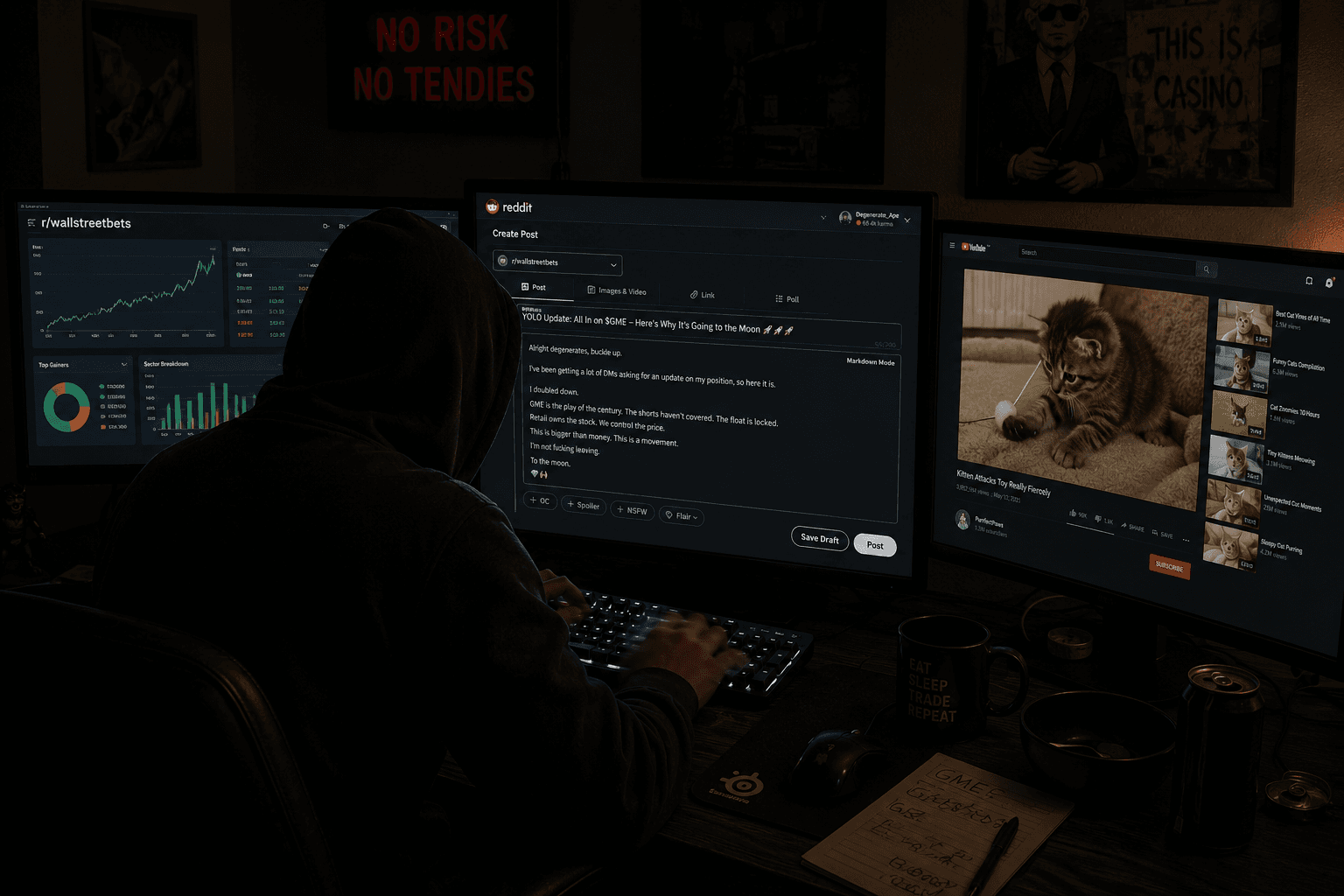
Your brand's Reddit problem is now a GEO problem
It gets pretty wild. Research from Cornell University found that a single Reddit comment, as short as 13 words, can redirect what an AI agent recommends. Reddit has become one of the heaviest inputs into AI answers, anyone can write on it, and both attackers and cheaters have noticed.
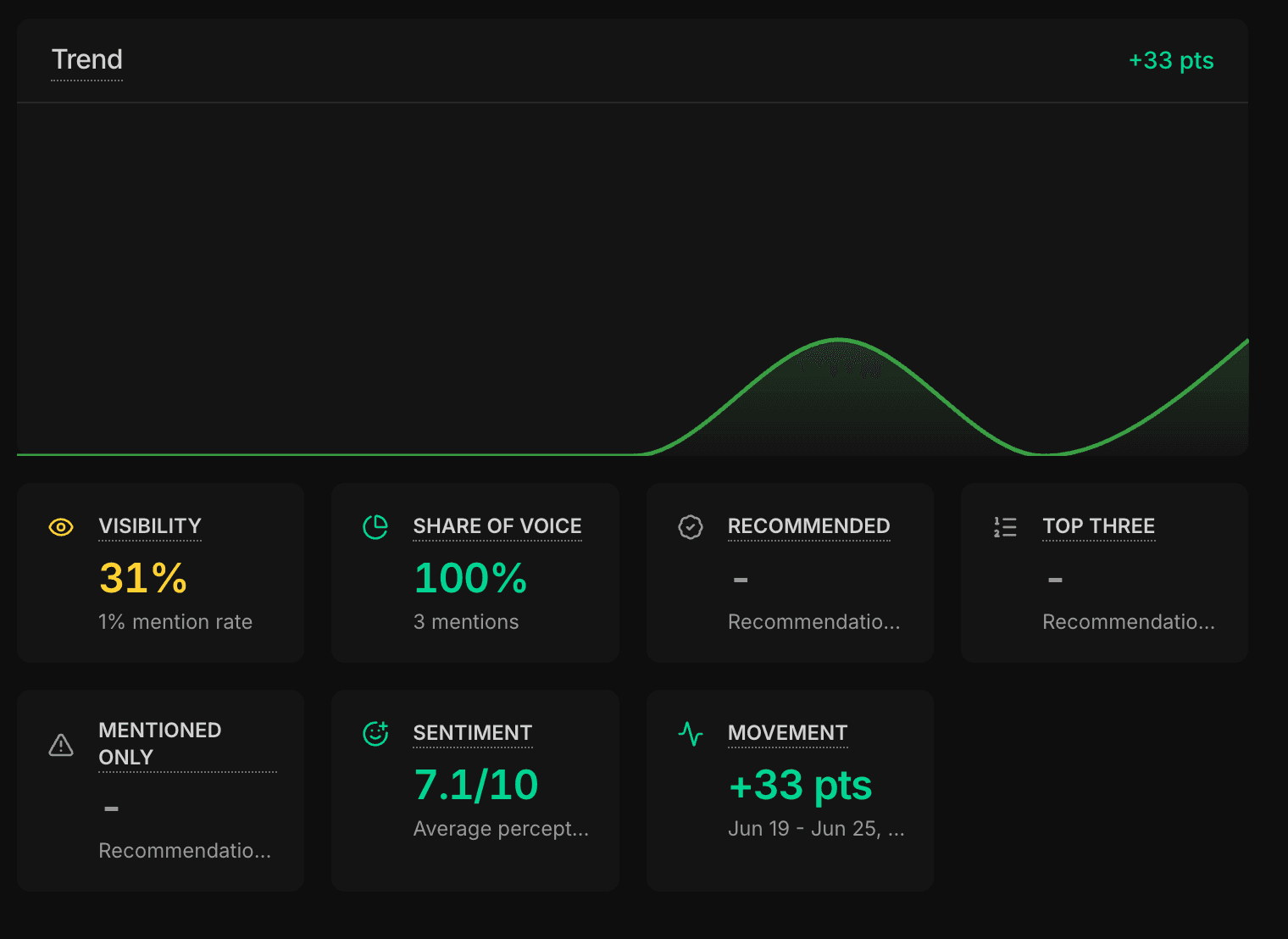
Why your AI visibility score swung overnight (and the 3 numbers that matter)
One example made the rounds in the marketing community this year. A single brand's share of voice for one prompt read 25% in the morning, 63% by lunch, and 43% by the evening. Same engine, same question, same day, no change to the brand at all. That's a 38-point swing while everyone was at their desks. If you'd screenshotted the morning number for a report, you'd have told a very different story than the lunchtime one.

Everything we've written about AEO in 2026 so far
Over the past few months, we've published a run of posts on answer-engine optimisation. Covering how AI assistants decide which brands to recommend, what to measure, how to set up tracking, and why the quality of your content matters more than ever. Here's everything in one place with a suggested reading order if you're starting from scratch.