Your brand's Reddit problem is now a GEO problem
Reddit comments can influence AI recommendations about your brand. How to assess the threads being cited and monitor changes.
Most founders we speak to have a rough mental model of brand risk. Bad press, a review-site pile-on, maybe a social media storm. Almost none of them have priced in the channel that now sits upstream of all of those. What AI assistants say when a buyer asks about their category.
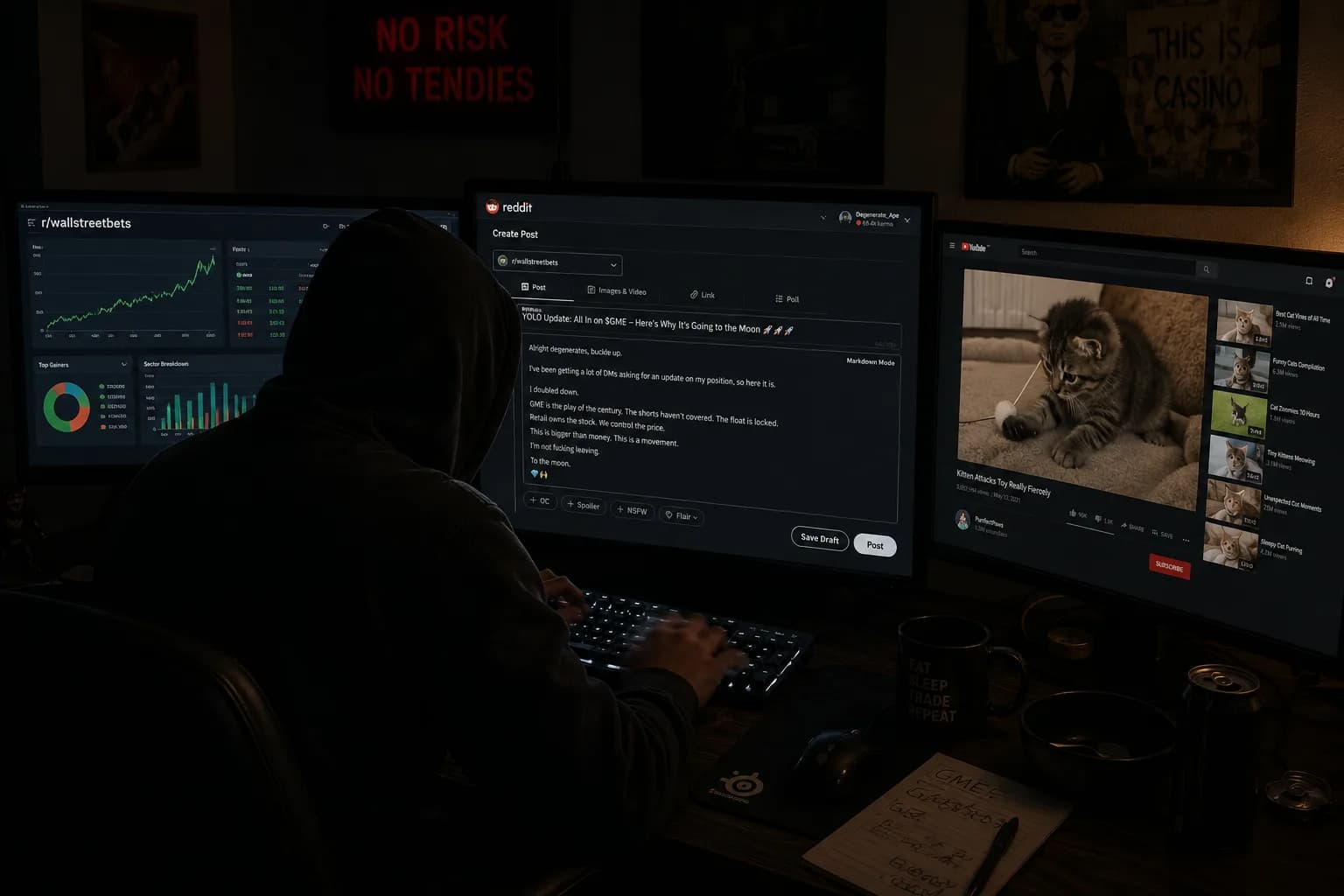
It gets pretty wild. Research from Cornell University found that a single Reddit comment, as short as 13 words, can redirect what an AI agent recommends. Reddit has become one of the heaviest inputs into AI answers, anyone can write on it, and both attackers and cheaters have noticed.
This piece lays out the mechanics. How Reddit came to steer AI answers, how it's being exploited against brands, why the brands exploiting it for themselves are borrowing from their own future, and what a sensible defensive posture looks like. Our aim is that by the end you can assess your own exposure in an afternoon.
How Reddit affects AI recommendations
Three claims, each backed by evidence below.
First, Reddit now materially shapes what ChatGPT and other AI assistants say about brands, and this is structural, not a passing quirk. Second, manipulating it is cheap, proven, and largely invisible to the target, which makes it a genuine threat vector for any brand with motivated competitors. Third, brands running fake-post campaigns for quick visibility gains are accumulating platform, community, regulatory, and model-level liabilities that outweigh the lift. The rational strategy is legitimate presence plus continuous monitoring, not manufactured praise.
Now the case.
How one forum came to steer AI answers
In February 2024, Reddit licensed its content to Google in a deal reported at around USD 60 million a year. A partnership with OpenAI followed, estimated near USD 70 million a year. The commercial logic was straightforward. AI companies need authentic human experience to ground their answers, and Reddit holds two decades of it.
The downstream effect is measurable. An analysis of 150,000 AI citations found Reddit appearing in roughly 40% of AI answers, ahead of Wikipedia at about 26%. Google's AI Overviews cited Reddit in around 21% of responses across a ten-month tracking period.
Models favour Reddit because it reads like unvarnished first-hand experience. Real buyers comparing tools, warning each other off, recommending alternatives. The trouble is that the models treat this as evidence while having limited ability to verify who wrote it, or why.
For a founder, the practical translation is this. A three-year-old thread by an anonymous account may now carry more weight with your next customer's research assistant than your entire website.
Bad agents take action, is your brand a target?
Consider what an adversary can do with that.
The cost of an attack has collapsed
The Cornell researchers called their method Web Agent Retrieval Poisoning. The only capability it requires is posting a comment. A short remark claiming a product was returned in favour of a rival looks unremarkable to a human moderator and reads as a strong steering signal to a model. There's no exploit, no hacking, no budget. The attack surface is the comment box.
Sustained campaigns have destroyed real businesses
The most instructive documented case predates the AI layer entirely. As reported in industry coverage of the incident, the moderator of a coding bootcamp community, simultaneously the co-founder of a competing bootcamp, posted negative content about a rival roughly daily for 500 days. The target reported losing about 80% of its revenue.
That campaign worked when only humans were reading. Today the same corpus of hostile posts would also be retrieved and repeated by AI assistants every time someone asks whether the company can be trusted. The attack now compounds through a second channel, and the second channel doesn't forget.
Fabricated voices demonstrably move opinion
Where doubt remains about whether synthetic personas can shift real communities, the evidence is uncomfortable. University of Zurich researchers covertly ran AI bots in a major Reddit debate forum to test persuasion at scale. The study was unauthorised and widely condemned, including by Reddit itself. Its implication stands regardless. Manufactured voices persuade, and the models reading those threads can't reliably tell the difference either.
For risk purposes, treat this the way you'd treat any low-cost, high-impact, low-detection threat. Assume it will eventually be pointed at you, and build detection first.
The temptation side, brands gaming their own numbers
The same mechanics that enable attacks enable self-promotion, and an industry has formed to sell it. Reporting by 404 Media documented companies flooding communities such as r/Biohackers with coordinated posts dressed as genuine user experiences, written specifically to be scraped into AI answers. Fresh accounts, thin histories, activity clustered around one product category, praise threaded into engagement-bait conversations.
We understand the appeal. Visibility in AI answers correlates with pipeline, the tactic is cheap, and early results look great in a dashboard. Our advice to clients is blunt. Don't. Not on ethical grounds alone, but because the unit economics fall apart once you account for four liabilities.
Liability one, the platform can vaporise the asset
Reddit's licensing revenue, a reported USD 130 million a year across the two deals, depends on its data being presumed authentic. That makes purging inauthentic content an existential priority, and enforcement reflects it. Spam accounts for roughly two-thirds of admin bans, and accounts that exist mainly to promote get removed along with their post history. Deleted posts exit future retrieval. You're renting visibility from a landlord with every incentive to evict you.
Liability two, discovery converts your campaign into hostile content
Reddit communities are exceptionally good at spotting astroturf, and the exposure thread routinely outperforms the planted content. The result is perverse. The most authentic, most upvoted, most citable content about your brand becomes the thread accusing you of manipulation. You will have paid to make your worst press the model's favourite source.
Liability three, regulators have moved from guidance to fines
In the UK, the fake review provisions of the Digital Markets, Competition and Consumers Act have been in force since 6 April 2025, with CMA powers to fine up to 10% of annual global turnover and five businesses already under investigation. In the US, the FTC's Consumer Review Rule carries penalties of up to USD 53,088 per violation and produced its first round of warning letters in December 2025. Posts that purport to be genuine consumer experience and aren't sit squarely inside both regimes. What a growth channel giveth, an enforcement action taketh away, with interest.
Liability four, the gains don't hold anyway
AI answers regenerate continuously from re-crawled, re-weighed sources. Our own client tracking shows brand visibility in AI answers is volatile even for well-established brands. Positions propped up by a few planted threads are the most fragile positions in the system. A moderator sweep or a model update resets them to zero, and unlike genuine advocacy, nothing regrows. A brand with years of authentic mentions holds a compounding asset. A brand with purchased threads holds inventory awaiting deletion.
Weigh a temporary visibility bump against platform bans, community exposure, fines scaled to turnover, and structural fragility. The trade only looks good if you never model month 13.
Assess your exposure
We promised you could gauge your own exposure quickly. Here's the audit we run in a first working session with clients, compressed to four steps.
Step one, interrogate the assistants
Take the ten questions your buyers most plausibly ask an AI assistant. Category recommendations, your brand versus each main competitor, is your brand legitimate, common complaint themes. Put them to ChatGPT, Gemini, and Perplexity. Record what's said, who's recommended, and which sources are cited. This is your baseline, and most teams are surprised by it. Roughly an hour.
Step two, map your Reddit surface
Search Reddit for your brand, your product names, and your category terms. Identify the threads that rank and the ones the assistants cited in step one. For each, note the sentiment, the age, and whether the participating accounts look organic. Fresh accounts with single-category histories and recycled phrasing are the tell. Another hour.
Step three, score the gap
Compare what the assistants say against what you know to be true. Three gap types matter. Factual errors, where the model repeats something wrong. Absence, where competitors appear in answers you should be in. And hostile steering, where specific threads push buyers elsewhere. Each type has a different fix, which is why lumping them together as bad AI coverage leads to wasted effort.
Step four, assign an owner
The single most common failure we see isn't a bad score. It's that nobody owns the channel, so nothing is watched and nothing compounds. Decide who reviews AI answer coverage monthly, who responds when something shifts, and what threshold triggers escalation. A channel this influential shouldn't be ownerless.
If the afternoon reveals problems, the response sequence matters. Document before anything gets deleted, report coordinated inauthenticity to the platform with evidence, never respond to fake negativity with fake positivity, and counter hostile threads by strengthening the genuine evidence around them rather than arguing inside them. Where a sustained campaign traces back to a competitor, the regulatory regimes above make legal advice worth the fee.
What a sensible posture looks like
We recommend clients treat the AI answer layer as they'd treat any material channel. With a strategy, an owner, and instrumentation.
Build presence you'd defend in public
Participate in relevant communities as yourselves, disclosed and useful. Answer the hard questions in your niche without pitching. This produces exactly the organic, authentic mentions that models weight, and it survives every enforcement mechanism above because there's nothing to enforce against.
Make the product the campaign
Unprompted recommendations remain the strongest signal in the system, and they can't be faked durably. Distinctive products, honest pricing, and useful content generate them. Slow, compounding, and unglamorous, which is usually what working strategies look like.
Treat community reputation as a balance-sheet item
The bootcamp case above should change how boards think about this. An 80% revenue loss driven substantially by one platform's threads isn't a marketing nuisance, it's a material business risk, and it deserves the same treatment. That means it appears in your risk register, it has a named owner, and leadership sees a trend line, not an anecdote. In our experience the companies that handle answer-layer incidents well aren't the ones with the biggest budgets. They're the ones that decided in advance whose job it was.
Instrument the answer layer
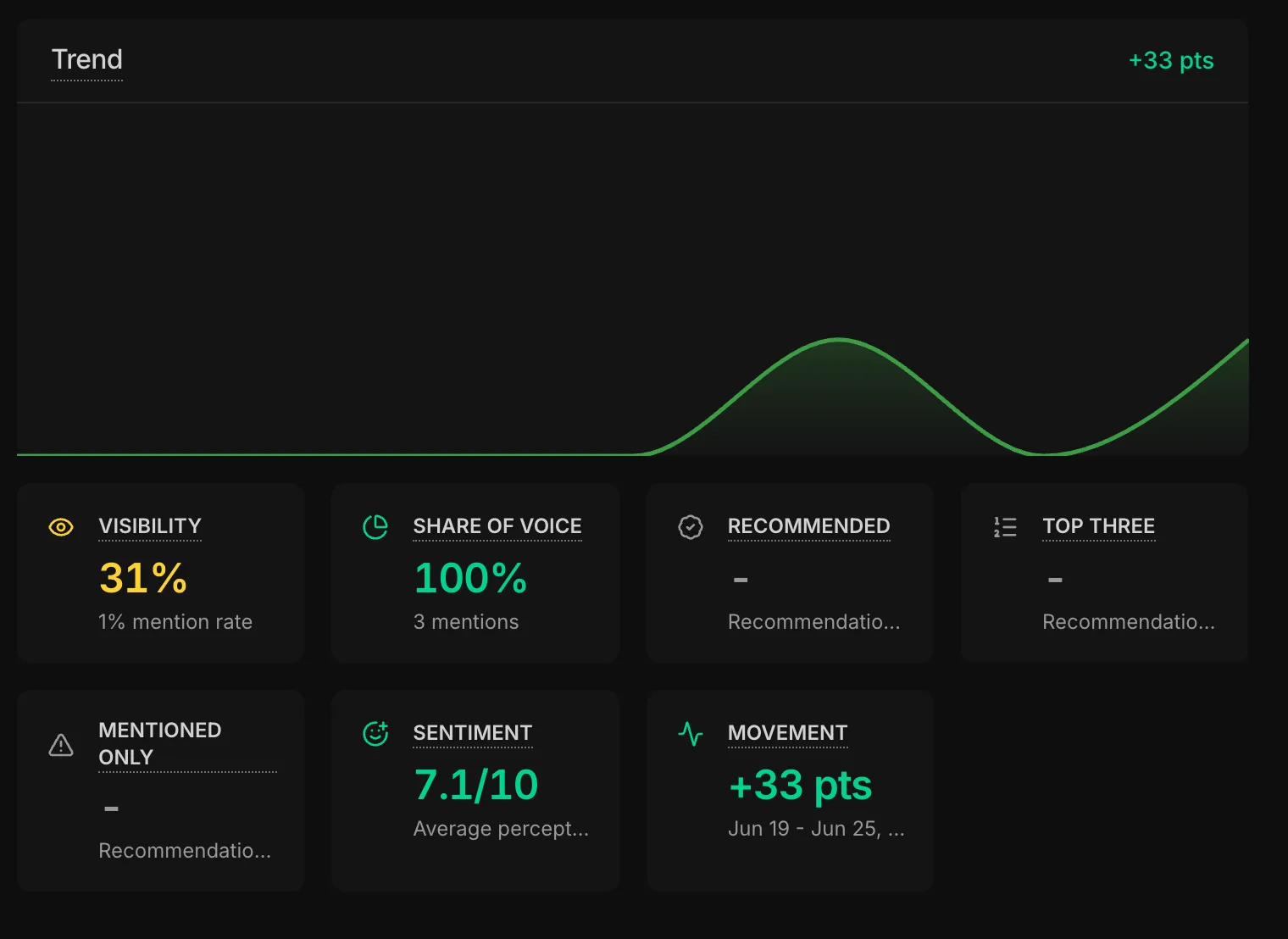
The non-negotiable piece. Attacks and organic reputation shifts alike are invisible until you measure them. You want to know what AI assistants say about your brand and your competitors, how that changes week to week, and which sources drive the change. A hostile thread that starts steering recommendations should surface as an alert within days, while there's still time to respond, report, or counter with genuine content. Not as a mystery in next quarter's pipeline review.
This is the monitoring discipline we set up for clients using Cleotic, our AI visibility platform. In practice, four capabilities do the heavy lifting.
Answer attribution shows you every page and thread the assistants cite when they mention your brand. This matters because everything in this article comes down to sources. When a recommendation shifts, attribution takes you straight to the thread that caused it, so the question of whether a change is organic or planted stops being guesswork and becomes a list of links you can inspect.
Answer gaps show you the buying questions where you simply don't appear. Not every visibility problem is an attack. Often the assistants skip you because nobody, including you, has published anything worth citing on that question. Gap analysis turns that silence into a content brief, which is the legitimate counterpart to everything the astroturfers are trying to fake.
Sentiment analysis tracks the tone of what's said about you, not just whether you appear. A brand can be highly visible and quietly getting buried. A slow negative drift in sentiment, especially one concentrated on a single source, is usually the earliest measurable trace of the campaigns described above.
And per-model tracking recognises that there's no single AI opinion of your brand. ChatGPT, Gemini, and Perplexity retrieve from different sources, weight them differently, and can hold entirely different views of you at the same time. Knowing which model has the problem tells you which sources to fix.
Together they turn the answer layer into a managed channel rather than an ambient risk. Benchmarked against competitors, week over week, with alerts when something moves.
Three questions founders ask us about this
Isn't this just SEO spam with a new name?
Structurally yes, economically no. In the SEO era, a penalty hit a page and you could publish another one. At the answer layer the dynamics are harsher in both directions. Damage compounds, because a hostile thread feeds every future answer rather than one search result. And punishment compounds too, because coverage of your manipulation becomes high-authority source material that models cite indefinitely. The stakes rose on both sides of the ledger, which is exactly why the cheap tactic is a worse deal than it was in 2015.
We're small and nobody is attacking us. Does this still matter?
Smaller brands arguably have more at stake, not less. When a brand has thousands of mentions, one poisoned thread is diluted. When it has forty, one thread can dominate retrieval for an entire buying question. The Cornell work showed the cost of an attack is a comment, which puts it within reach of any annoyed competitor in any market, whatever the size. The good news is the defence scales down too. For a small brand, a dozen authentic community threads move the needle visibly.
Can't we just fix it once and move on?
No, and this is the point most teams miss. AI answers regenerate continuously. Sources get re-crawled, weights shift, and models update. A clean bill of health in July says nothing about October. That's why we frame this as a channel to instrument rather than a problem to solve. You wouldn't check revenue once a year and assume the trend held. The answer layer deserves the same standing scrutiny.
Check the Reddit threads that AI assistants cite about your brand. Investigate inaccuracies, assign someone to monitor changes and respond openly where appropriate.